


Canwha
Hear your way there. A new kind of tube experience for the blind community.
Hear your way there. A new kind of tube experience for the blind community.
Canwha began with an open brief from Transport for London and a question worth asking: what does the tube experience feel like when you can't see it? Focusing on the blind community as one of transport's most underserved groups, we set out to explore how sound alone could guide, reassure and direct.
The result sits between the physical and digital world. A simple app paired with powerful in-station beacons builds a dedicated navigation experience from the ground up — rich soundscapes and intelligent narration guiding users through every step, from topping up an Oyster to tapping in, finding the platform and catching the right train. Fully voice-operable, with deep controls for cadence, frequency and detail, Canwha puts the whole journey in reach.
Year
2025
Scope
Product Design, Visuals
Client
Transport for London (TfL)
Platform
iOS

Introducing Canwha
A new way to navigate the Underground with just sound.
A new way to navigate the Underground with just sound.
Designed to help improve a continuous problem of navigation for the blind and low vision community on TfL services, Canwha brings together sound and visuals to enhance navigation for everyone – including fully-sighted individuals.
Ambient chimes for navigation, turn-by-turn guidance, immediate help, and voice feedback from A to B, all designed to make navigation on the Tube so much better.

Top up? Tap in? Just ask
Never get stuck trying to find a top up reader, where to tap in or exit, or directions to a particular line again. Just search, or ask via voice, and get going.

Know when you’re at the reader
Sensitive haptics, approaching chimes and highly visible colour coding distinguishes arrival at the reader, making topping up much easier.

Get turn-by-turn guidance
Get detailed turn-by-turn guidance as you move around the station, supported by powerful triangulation, haptics and sound.

Top up with ease
Never get stuck at the gate again. Top up on the go, or at the reader, and watch your balance instantly update.

Never lose your way with maps
Know when to turn right, and get comprehensive maps for the section of the station you're in, powered by nearby beacons to isolate you in space.
Top up? Tap in? Just ask
Never get stuck trying to find a top up reader, where to tap in or exit, or directions to a particular line again. Just search, or ask via voice, and get going.
Know when you’re at the reader
Sensitive haptics, approaching chimes and highly visible colour coding distinguishes arrival at the reader, making topping up much easier.
Get turn-by-turn guidance
Get detailed turn-by-turn guidance as you move around the station, supported by powerful triangulation, haptics and sound.
Top up with ease
Never get stuck at the gate again. Top up on the go, or at the reader, and watch your balance instantly update.
Never lose your way with maps
Know when to turn right, and get comprehensive maps for the section of the station you're in, powered by nearby beacons to isolate you in space.
Top up? Tap in? Just ask
Never get stuck trying to find a top up reader, where to tap in or exit, or directions to a particular line again. Just search, or ask via voice, and get going.
Know when you’re at the reader
Sensitive haptics, approaching chimes and highly visible colour coding distinguishes arrival at the reader, making topping up much easier.
Get turn-by-turn guidance
Get detailed turn-by-turn guidance as you move around the station, supported by powerful triangulation, haptics and sound.
Top up with ease
Never get stuck at the gate again. Top up on the go, or at the reader, and watch your balance instantly update.
Never lose your way with maps
Know when to turn right, and get comprehensive maps for the section of the station you're in, powered by nearby beacons to isolate you in space.

Highly customisable
A rich, expressive experience however you like it.
A rich, expressive experience however you like it.
Beyond simple customisation, Canwha allows for deeply granular and personal control over almost every setting in the product, from icon size, to exact train arrival chime, voice input complexity, spatial range variance, name and speech cadence, sensitivity of dial and so much more.
It's a totally new view on individual product ownership, where there is no general experience – every Canwha version is totally unique to the user.

Delightfully thoughtful
An intuitive, personal experience welcomes you back, greets you in voice output, and keeps a consistent communication with you.

Hone in whatever you like
A rich set of settings allows for an exceptionally granular fine tuning of the experience, making every experience with Canwha completely unique.

Get help anywhere
A permanently accessible "Need help?" function makes getting help at any point easy, interrupting any flow to present immediate help.

Progressive updates
Designed to reflect changing needs from users, progressive updates to sounds, beacons and navigation keep a network of sound interactions continually fresh.
Delightfully thoughtful
An intuitive, personal experience welcomes you back, greets you in voice output, and keeps a consistent communication with you.
Hone in whatever you like
A rich set of settings allows for an exceptionally granular fine tuning of the experience, making every experience with Canwha completely unique.
Get help anywhere
A permanently accessible "Need help?" function makes getting help at any point easy, interrupting any flow to present immediate help.
Progressive updates
Designed to reflect changing needs from users, progressive updates to sounds, beacons and navigation keep a network of sound interactions continually fresh.
Delightfully thoughtful
An intuitive, personal experience welcomes you back, greets you in voice output, and keeps a consistent communication with you.
Hone in whatever you like
A rich set of settings allows for an exceptionally granular fine tuning of the experience, making every experience with Canwha completely unique.
Get help anywhere
A permanently accessible "Need help?" function makes getting help at any point easy, interrupting any flow to present immediate help.
Progressive updates
Designed to reflect changing needs from users, progressive updates to sounds, beacons and navigation keep a network of sound interactions continually fresh.

Accessibility
Built for harmony between sight and sound.
Built for harmony between sight and sound.
Co-created across sound and visuals, with chime and background sound development at the same time as visual UI development, the entire platform is designed to be fully accessible by voice and touch.
Granular "micro-chirps" for dial steps, coupled with haptic feedback, and callout chimes for successful voice activations, are created to go further and actually end to end build the whole product to work beautifully for blind users.

Chime minutae
With highly detailed audio preferences, you can choose to dial in chimes at the minutae, including precise distance control, speed of vocals and enhanced dialogue clarity.
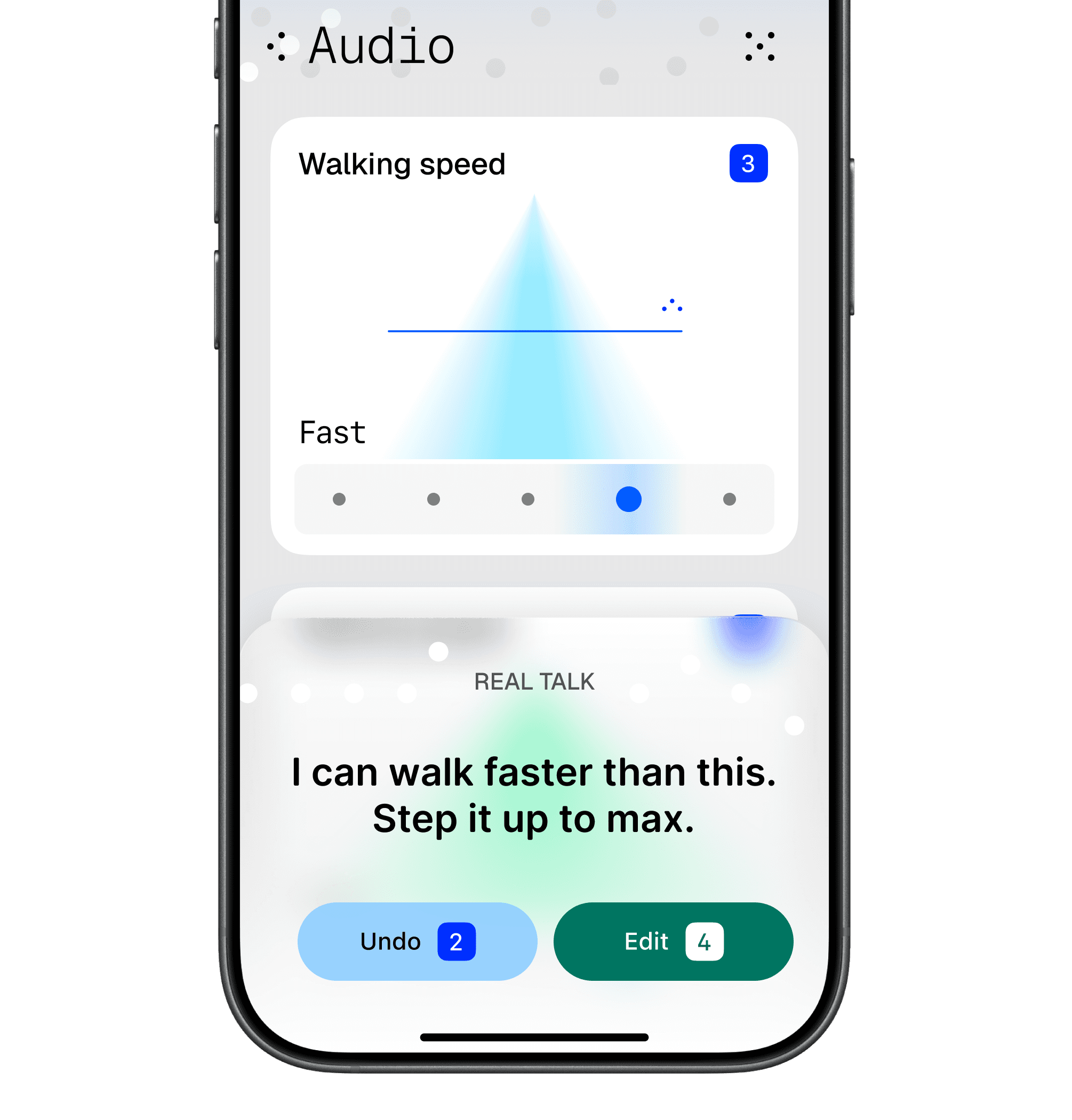
Just say it, and it’ll happen
With full voice navigation, you can continuously speak to navigate across the UI, including in natural speech, to take actions like editing sliders, undoing edits, and jumping to different pages directly.
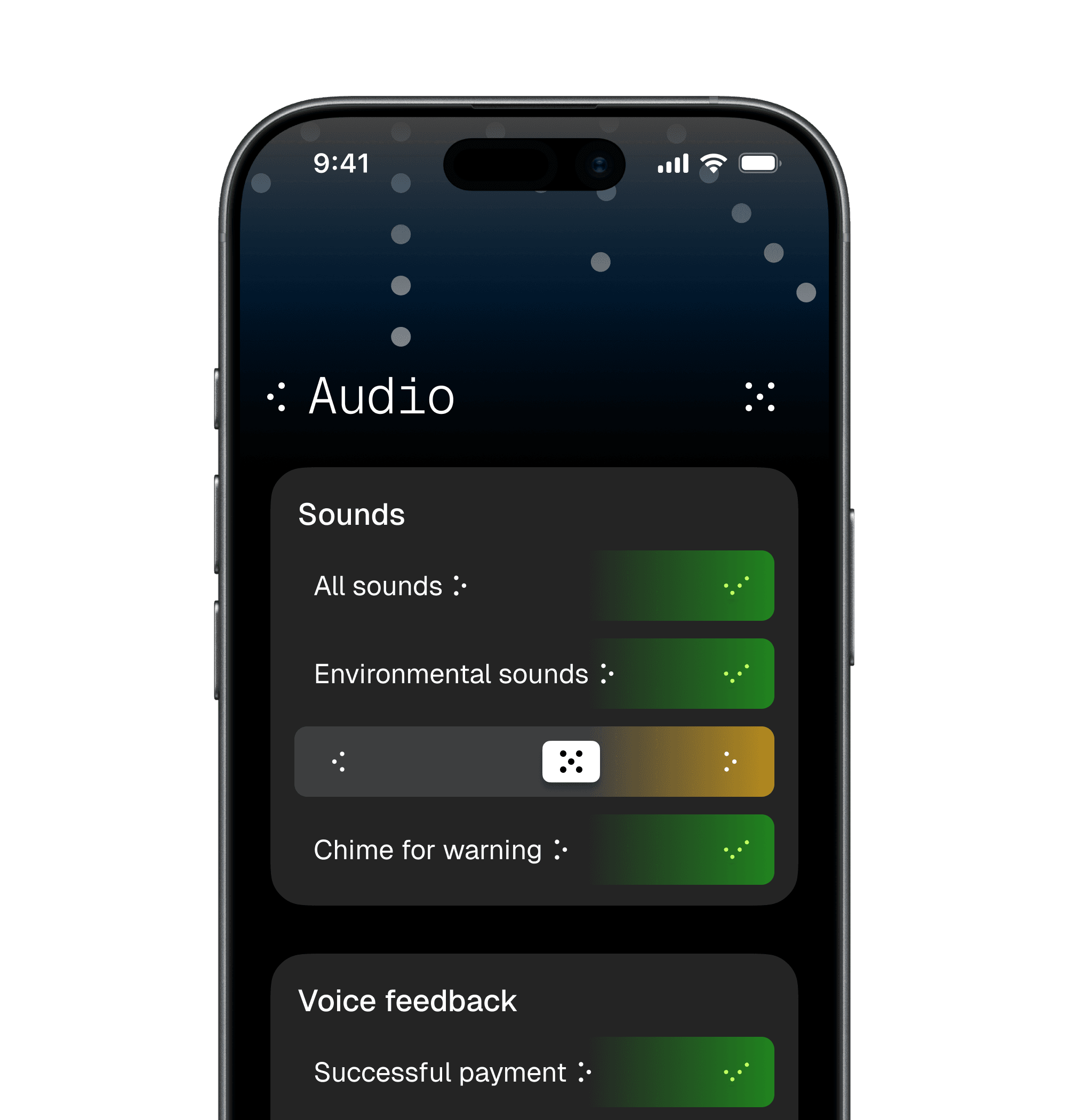
Full control over audio
Choose which sounds and the degrees of voice feedback that are most important to you, and refine volume levels to suit your ideal listening experience.
Chime minutae
With highly detailed audio preferences, you can choose to dial in chimes at the minutae, including precise distance control, speed of vocals and enhanced dialogue clarity.
Just say it, and it’ll happen
With full voice navigation, you can continuously speak to navigate across the UI, including in natural speech, to take actions like editing sliders, undoing edits, and jumping to different pages directly.
Full control over audio
Choose which sounds and the degrees of voice feedback that are most important to you, and refine volume levels to suit your ideal listening experience.
Chime minutae
With highly detailed audio preferences, you can choose to dial in chimes at the minutae, including precise distance control, speed of vocals and enhanced dialogue clarity.
Just say it, and it’ll happen
With full voice navigation, you can continuously speak to navigate across the UI, including in natural speech, to take actions like editing sliders, undoing edits, and jumping to different pages directly.
Full control over audio
Choose which sounds and the degrees of voice feedback that are most important to you, and refine volume levels to suit your ideal listening experience.

Dot System
A system that moves with you, no matter where you go.
A system that moves with you, no matter where you go.
The Dot System was designed with an ambitious goal to co-ordinate a consistent grid of dots, to animate and reflect the liveliness of different input and interaction models.
Dots are used for actions icons, buttons, audio and voice input and output, and as decorative components – creating a lively, focused material for communication.

Distinct but clear
With a distinct, playful look and feel, tied into the Dot System, every screen is distinct but clear and easy to navigate. A visual harmony between action icons, buttons and backgrounds makes moving around the system consistent and delightful.

Full control, at mobile precision
With a strong belief in giving full control even at mobile scale, precise mobile precision actually enhances the granularity of dials, allowing for specific variance in sound scope and tolerances, and is reflected in adjusted graphing and scales.
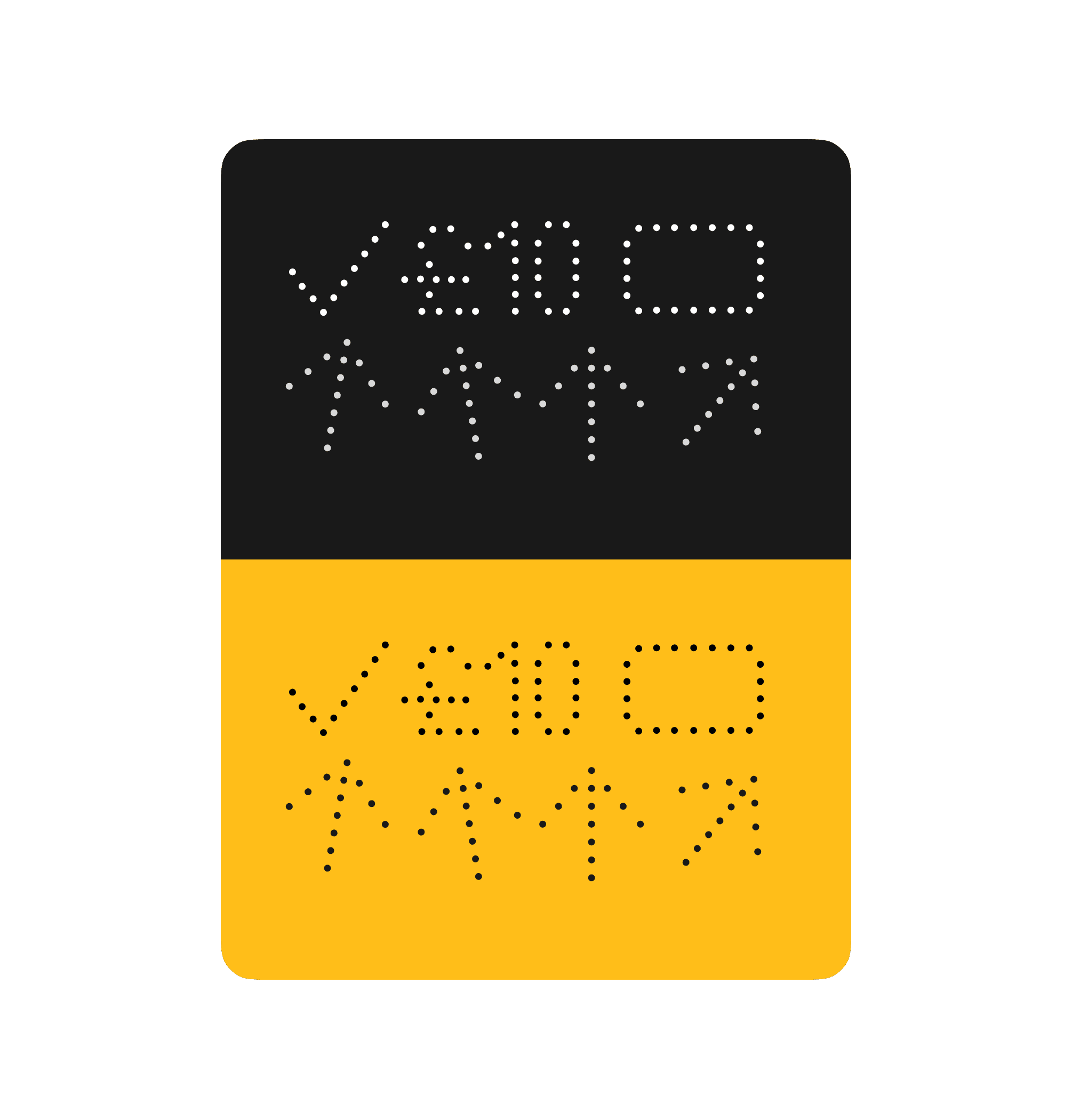
Comprised of dots
Built out of a series of animating dots, screens, icons and backgrounds are designed to guide and orientate. Dots act as a sand equivalent in the interface, making up iconography, alerts, thinking states for input, and speaking states for audio output.

Elegant and light interactions
With a focus on elegant and lightweight interactions, the Dot System features consistent iconography that's non-destructive, but attentative and highly functional. Colour is used sparingly to indicate more significant actions, while weights are light for clarity.
Distinct but clear
With a distinct, playful look and feel, tied into the Dot System, every screen is distinct but clear and easy to navigate. A visual harmony between action icons, buttons and backgrounds makes moving around the system consistent and delightful.
Full control, at mobile precision
With a strong belief in giving full control even at mobile scale, precise mobile precision actually enhances the granularity of dials, allowing for specific variance in sound scope and tolerances, and is reflected in adjusted graphing and scales.
Comprised of dots
Built out of a series of animating dots, screens, icons and backgrounds are designed to guide and orientate. Dots act as a sand equivalent in the interface, making up iconography, alerts, thinking states for input, and speaking states for audio output.
Elegant and light interactions
With a focus on elegant and lightweight interactions, the Dot System features consistent iconography that's non-destructive, but attentative and highly functional. Colour is used sparingly to indicate more significant actions, while weights are light for clarity.
Distinct but clear
With a distinct, playful look and feel, tied into the Dot System, every screen is distinct but clear and easy to navigate. A visual harmony between action icons, buttons and backgrounds makes moving around the system consistent and delightful.
Full control, at mobile precision
With a strong belief in giving full control even at mobile scale, precise mobile precision actually enhances the granularity of dials, allowing for specific variance in sound scope and tolerances, and is reflected in adjusted graphing and scales.
Comprised of dots
Built out of a series of animating dots, screens, icons and backgrounds are designed to guide and orientate. Dots act as a sand equivalent in the interface, making up iconography, alerts, thinking states for input, and speaking states for audio output.
Elegant and light interactions
With a focus on elegant and lightweight interactions, the Dot System features consistent iconography that's non-destructive, but attentative and highly functional. Colour is used sparingly to indicate more significant actions, while weights are light for clarity.
The sound of success
Impact by numbers.
Impact by numbers.
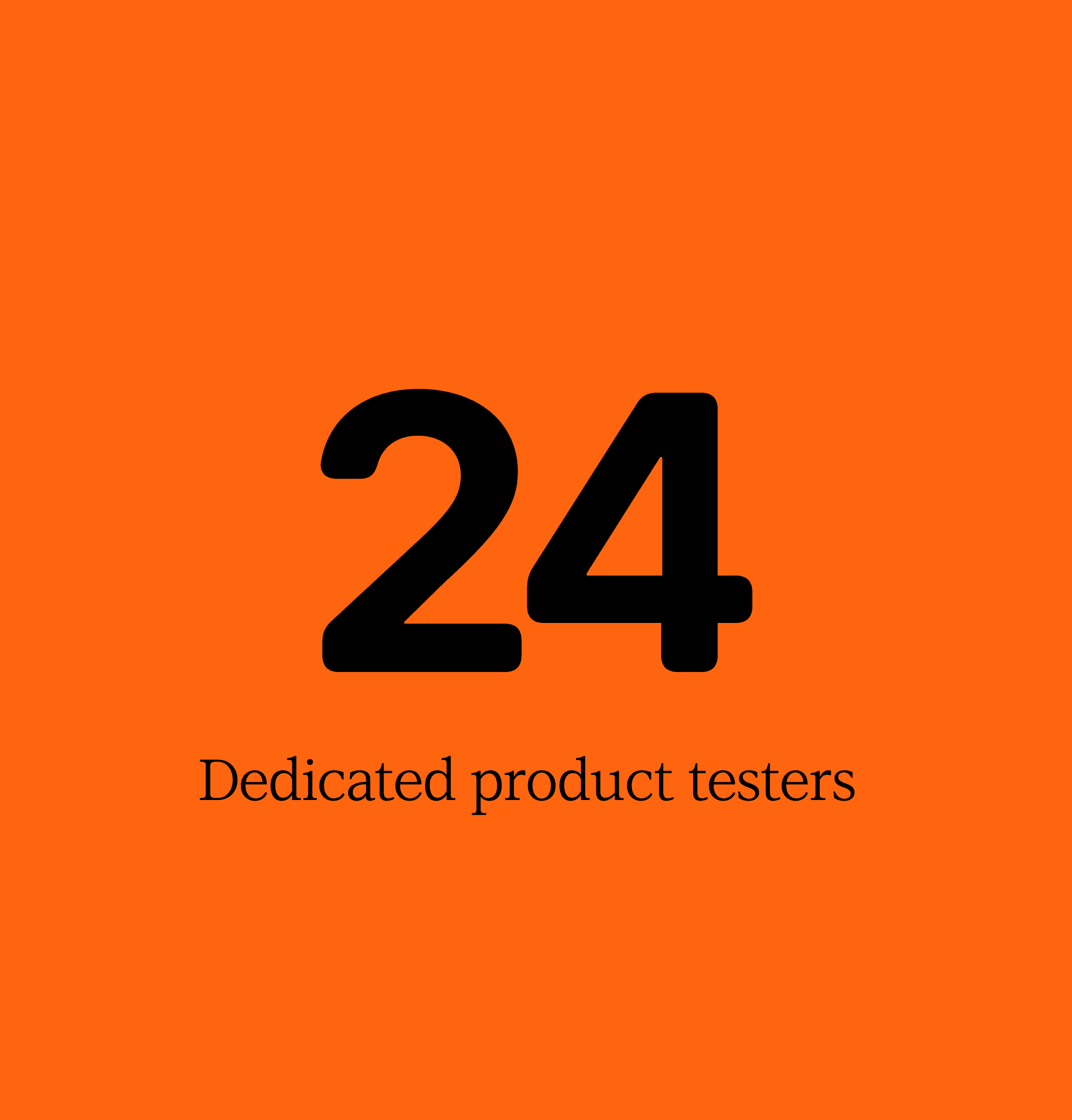
24 dedicated product testers
Based on a private testing audience (with special test NFC tags) of 24 testers at a private event. Required a compatible iPhone XS or later.

More than 180 test audience members
Based on an audience of 180 testers at a private event, with access to testing. Required a compatible iPhone XS or later.

3 team members
Based on the core team with 3 team members working across design, branding and strategy.

72 unique chime effects
Based on the total unique chime effects available in the testing package, and utilised for all the six (6) available demo experiences.

48 custom dot icons
Based on the total custom dot icons available in the testing package, and utilised for all the six (6) available demo experiences.

100% SwiftUI for the demo experience
Based on the initial MVP app testing package experience available to private event audiences.
24 dedicated product testers
Based on a private testing audience (with special test NFC tags) of 24 testers at a private event. Required a compatible iPhone XS or later.
More than 180 test audience members
Based on an audience of 180 testers at a private event, with access to testing. Required a compatible iPhone XS or later.
3 team members
Based on the core team with 3 team members working across design, branding and strategy.
72 unique chime effects
Based on the total unique chime effects available in the testing package, and utilised for all the six (6) available demo experiences.
48 custom dot icons
Based on the total custom dot icons available in the testing package, and utilised for all the six (6) available demo experiences.
100% SwiftUI for the demo experience
Based on the initial MVP app testing package experience available to private event audiences.
24 dedicated product testers
Based on a private testing audience (with special test NFC tags) of 24 testers at a private event. Required a compatible iPhone XS or later.
More than 180 test audience members
Based on an audience of 180 testers at a private event, with access to testing. Required a compatible iPhone XS or later.
3 team members
Based on the core team with 3 team members working across design, branding and strategy.
72 unique chime effects
Based on the total unique chime effects available in the testing package, and utilised for all the six (6) available demo experiences.
48 custom dot icons
Based on the total custom dot icons available in the testing package, and utilised for all the six (6) available demo experiences.
100% SwiftUI for the demo experience
Based on the initial MVP app testing package experience available to private event audiences.
Designed with love in London
All iconography, illustrations and visuals were hand crafted by Jackson.
Copyright & Properties
iPhone, iPad, Mac and Apple Watch are registered trademarks of Apple Inc. TfL, Oyster and the TfL logo are trademarks of Transport for London. Hermes, the Hermes logo and wordmark are trademarks of Hermes. The Bounce Back logo is a trademark of Bounce Back Drinks Limited. All other logos and wordmarks are the respective trademarks of their owners. No infringement is intended.
All testing information (including comparisons against production versions) is accurate as of the time of print, or the time of the studies undertaken. No liabilities are assumed for any mistakes, inaccuracies or factual errors made in the publishing of the case studies contained herein.
Copyright Jackson Moran 2026-27. All rights reserved.
Designed with love in London
All iconography, illustrations and visuals were hand crafted by Jackson.
Copyright & Properties
iPhone, iPad, Mac and Apple Watch are registered trademarks of Apple Inc. TfL, Oyster and the TfL logo are trademarks of Transport for London. Hermes, the Hermes logo and wordmark are trademarks of Hermes. The Bounce Back logo is a trademark of Bounce Back Drinks Limited. All other logos and wordmarks are the respective trademarks of their owners. No infringement is intended.
All testing information (including comparisons against production versions) is accurate as of the time of print, or the time of the studies undertaken. No liabilities are assumed for any mistakes, inaccuracies or factual errors made in the publishing of the case studies contained herein.
Copyright Jackson Moran 2026-27. All rights reserved.
Designed with love in London
All iconography, illustrations and visuals were hand crafted by Jackson.
Copyright & Properties
iPhone, iPad, Mac and Apple Watch are registered trademarks of Apple Inc. TfL, Oyster and the TfL logo are trademarks of Transport for London. Hermes, the Hermes logo and wordmark are trademarks of Hermes. The Bounce Back logo is a trademark of Bounce Back Drinks Limited. All other logos and wordmarks are the respective trademarks of their owners. No infringement is intended.
All testing information (including comparisons against production versions) is accurate as of the time of print, or the time of the studies undertaken. No liabilities are assumed for any mistakes, inaccuracies or factual errors made in the publishing of the case studies contained herein.
Copyright Jackson Moran 2026-27. All rights reserved.